
The Art of Terracotta Craftsmanship
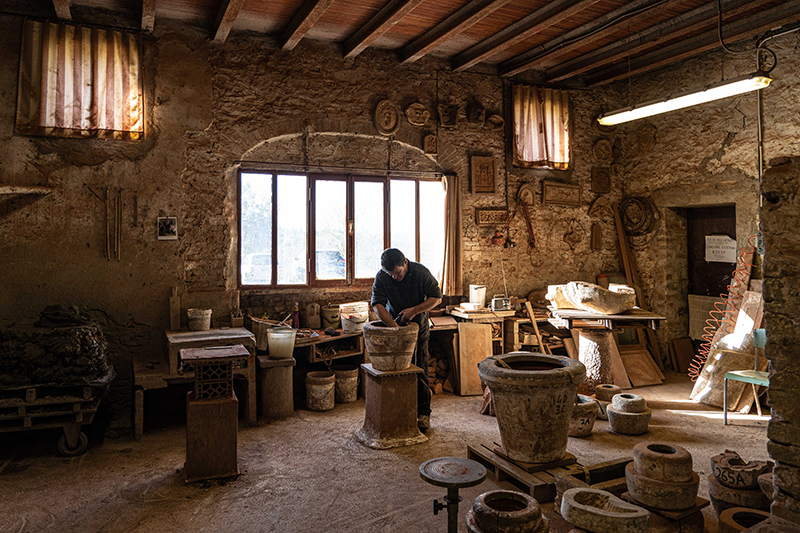
The making of all our terracotta products draws on time-honoured artisanal techniques, including the ancient posteggiatura (coil-building) method and traditional moulding.
The Impruneta tradition of working with clay is one of the finest expressions of Italian craftsmanship, rooted in history and devotedly passed down through generations. Extracted from the clay pit owned by Poggi Ugo Terrecotte,this prized clay is carefully selected and worked entirely by hand, using techniques refined by master craftspeople over the centuries.
Terracotta working techniques: Posteggiatura
“Posteggiatura”is the oldest technique for working with terracotta. This method is carried out entirely by hand, without the use of any moulds or supports. It is also the most complex technique, relying entirely on the skill and experience of the master craftsperson.
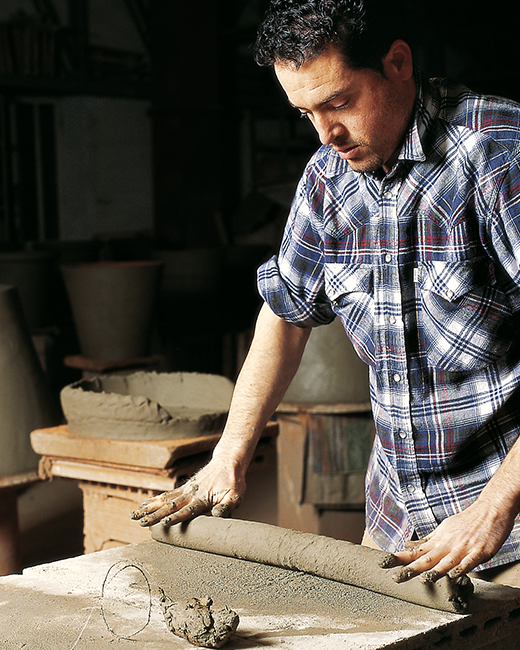
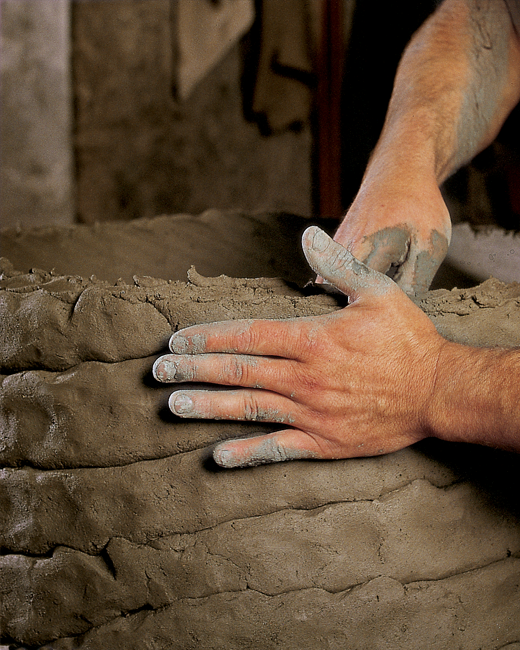
The process begins by forming the base of the object on a work surface: a ball of clay is flattened by hand into a circular shape, with the edges left slightly raised to hold the“lucignolo” (literally, “wick”), a long, rope-like strand of clay rolled out by hand. This technique, also known as the “colombino” or coil-building method, involves adding successive strands of clay around the base, gradually joining them together to form a compact, sturdy piece.
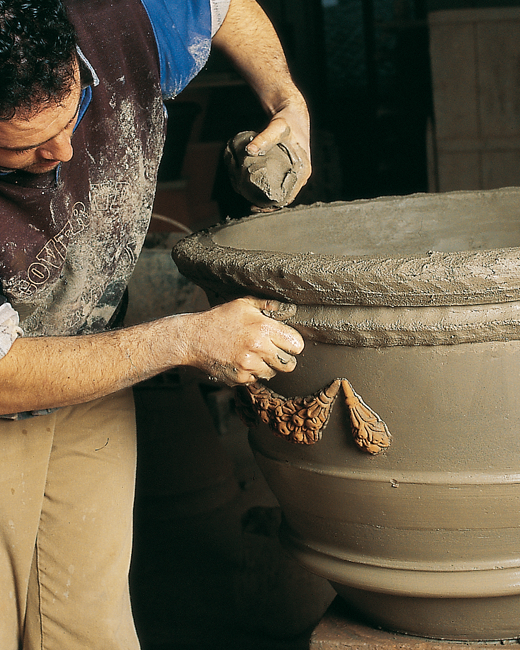
The final stages involve burnishing, smoothing and finishing, all carried out with great skill to ensure harmony and precision in the decorative details.
The “shell” technique
Another way of working with terracotta is known as the “a guscio” (literally, “shell”) technique. In this method, the piece is shaped using a terracotta or plaster mould dusted with fired clay powder to prevent the fresh clay from sticking to it.
The clay is then pressed by hand against the outside of the mould, following theposteggiatura method and adding coils around the mould. The object remains stationary while the craftsman moves backwards around it, pressing the clay into an even, compact layer. Once this stage is complete, the piece is turned upside down onto a work surface and the inner mould is removed, leaving a shell that is then finished with rims and decorative details, depending on the intended design.
Terracotta casting method
Terracotta casting uses plaster moulds into which the clay is pressed by hand to accurately reproduce the shape of the piece. Once the clay has dried sufficiently, the mould walls are removed, revealing the pot with its shape and decorative details already defined. The piece is then carefully smoothed and finished down to the finest detail.
Casting in plaster moulds allows our artisans to shape statues, risers, benches, fountains, planters, and busts with precision, ensuring a high-quality finish.
In essence, the shell technique and casting in plaster moulds are opposites: with the former, the artisan presses the clay against the outside of a convex mould, whereas in casting, the mould is concave and the clay is pressed and shaped from within.
Terracotta as a work of art
The skill and passion of our craftspeople at every stage of production result in a finished piece that embodies authentic tradition and artisanal excellence. The art of working with Impruneta clay reaches an exceptional standard at Poggi Ugo Terrecotte, where age-old techniques continue to shape creations of timeless beauty.